


Wound Healing and Essential Oils


For wound treatment I would choose oils that are cicatrizant, astringent, and vulnerary. Oils with cicatrizant properties promote the healing of wounds and keep them antiseptic. They will also prevent formation of scar tissue. Some oils are vulnerary and they will also promote the healing of wounds and prevent the wounds from being infected. Oils with styptic actions will stop the local bleeding. Astringent oils will contract tissues in order to make them firmer, denser and decrease discharges.
Below is a formula I used as a compress several years ago to treat a wound. Compresses are very effective and useful in treating a small area. I would have added bergamot to this blend but it is phototoxic and we were out in the sun when I made this compress.
Wound Healing Compress:
- Benzoin resinoid 3 drops - Its styptic property will arrest the bleeding
- Roman Chamomile 3 drops - For disinfecting the wound. Its vulnerary, cicatrizant, and antiseptic properties will promote healing of the wound and prevent scar tissue.
- Purified water 9 oz
Add the water to a bowl and then add the essential oils. soak a soft cloth, gauze or a piece of flannel in the water. Make sure that you wring it out so that it doesn't drip and apply to the injured area. It is preferable to cover the cloth with saran wrap and then a towel to keep the aromas in. Re-apply the compress once it dries out. Repeat the treatment 15 minutes to one hour. Do this three times a day if needed.
Other oils historically been used for wound healing:
German chamomile, frankincense, everlasting (Helichrysum), myrrh, lavender, neroli, rose, palmarosa, yarrow and sandalwood.
German chamomile, frankincense, everlasting (Helichrysum), myrrh, lavender, neroli, rose, palmarosa, yarrow and sandalwood.
Calendula officinalis has also traditionally been used for the treatment of wound healing. It is generally used as an infused oil.
Other related posts:
Lavender to The Rescue
Make an Antiseptic Vinegar
Essential Oils for First Aid- Protect Your Family
How I Would Deal With A Scorpion Sting
Other related posts:
Lavender to The Rescue
Make an Antiseptic Vinegar
Essential Oils for First Aid- Protect Your Family
How I Would Deal With A Scorpion Sting
This post is shared on:
4:42 PM |
Read more...
Aromatic Compress for Bruising

I like to use aromatic compresses for minor things at home. According to Battaglia, some of the benefits of using a compress are:
- that it may relieve lymphatic and fluid congestion.
- may clear heat, fever, and inflammation.
- may improve circulation and reduce pain.
- may relieve tiredness.
Aromatic compresses are essential oils mixed with water, and applied to the skin with aid of a strip of gauze. Compresses can be either hot or cold.
Hot compresses are made with water that is as hot as can be tolerated. The hot compresses has historically been used to reduce muscular and rheumatic pain. It has also been used to draw out boils and splinters.
Cold compresses are made with ice water. According to Battaglia, its uses include treating sprains, swelling, fever, and to relieve stress.
Cold compresses are made with ice water. According to Battaglia, its uses include treating sprains, swelling, fever, and to relieve stress.
The adult formula calls for 8-10 drops of oils, so for my 10 year old daughter I used half the amount oils.
4-8 oz. warm or cold water
5 drops essential oils
5 drops essential oils
I decided to use a cold compress for my daughter, but first I applied an ice pack while I was fixing the water for the compress. After the third day I will switch to a hot compress. In between using the compresses 3 times a day,I add massage oil blend to the area.
I decided to use my favorite Pain Relieving blend that includes oils historically used for bruises. The ingredients in the blend are wintergreen, helichrysum, clove, and peppermint. This is a powerful blend of anti-inflammatory and analgesic essential oils historically used for reducing pain and inflammation. I would not use these oils on infants and very young children. It may cause skin sensitivity, so don't forget to perform a skin patch test before you need to use it.
If I didn't use the Pain Relieving Blend then I would have considered using oils such as peppermint, geranium, eucalyptus, lavender, fennel , rosemary and cypress. They have historically been used for bruising. These can be used as singles or mixed in a blend. The oils mentioned are oils that I would use on my 9 and 10 year old. The dilution chart will give you also give you information what oils to use for what age group.
My oldest son is playing football, and if there's severe bruising involved I add oils that stimulate the spleen, such as black pepper, chamomile and lavender as recommended by Battaglia. He also suggest other things to consider in bruising, like increase my son's intake of Vitamin C bioflavonoids, to make sure he avoids aspirin, and increases dark green leafy vegetables and fresh fruit high in vitamin C.
6:33 AM |
Read more...
Varicose Veins - What to Do Naturally
Varicose veins are a sign of poor circulation and venous valve collapse. These veins are abnormally enlarged due to a weakness of the valves inside the veins that allow blood flow back to the heart. When the valves are weakened the blood accumulates in the veins causing them to stretch which leads to varicosities. The veins of the legs are commonly affected due to the pressure standing has on the veins.
Be aware that there is a more serious form of varicose veins that involves the obstruction of and valve defects of the deeper veins. This type can lead to serious problems.
What to do
Even though I often write posts specifically about using essential oils and herbs it is important to remember that it starts with health building through diet, exercise, removal of toxins, and certain supplementation first. I have great success using herbs and essential oils myself, but I use them in addition to an already good diet.
Diet
- If you haven't already, I advise you to remove all the refined carbohydrates from your diet and increase the intake of fresh vegetables and fruit.
- A high fiber diet is important. If you increase your intake of vegetables and fruit you'll increase your intake of fiber as well.
- Vitamin C may reduce tendency to blood clotting, and it aids circulation. It is hard to achieve a high amount of Vitamin C through diet alone so consider supplementing with vitamin C.
- Flavonoid-rich berries may increase the integrity of the walls of the veins, so consider adding blackberries, blueberries, cherries, and hawthorn berries to your diet.
- According to Battaglia, people with varicose veins don't break down fibrin as well and this leads to fibrin being deposited near the varicose veins. Ginger, garlic, cayenne, and onion increase fibrin break down so include them liberally in your diet.
- Make sure you drink at least 6-8 glasses of water a day.
The role of astringents
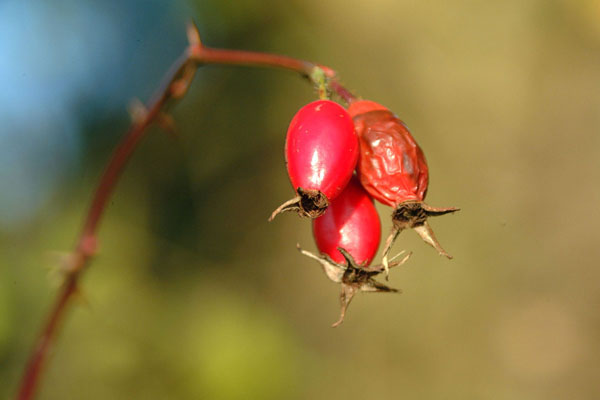
Astringents are needed to tone the blood vessels. Herbs with astringent effects are horsechestnut, rose hips, sage, butcher's broom, and witch hazel.
Aromatherapy
The main purpose of the treatment is to tone the veins walls to improve circulation and to support the surrounding tissues. When you start researching about using essential oils for varicose veins you find that there's a split opinion as to if the affected area should be massaged or not. I found that it is usually fine if the oils are applied on the location and rubbed gently. An aromatic spray or a compress can also be used for extremely painful conditions.
Gently massaging with essential oils may encourage lymphatic drainage and blood return. When treating varicose veins you want to use essential oils that have astringent, vaso-constrictive, anti-inflammatory, and slightly diuretic properties.
The essential oils
Cypress is a true venous decongestant as well as an astringent and should be included. Other oils historically used are lemon, geranium, cypress, rosemay, helichrysum, bergamot, juniper. It normally takes a while before improvement so it is important to be patient. It is important to change the essential oils after a while so don't use the same combination of essential oils all the time in your blends. For example, according to Battaglia, use lemon and cypress together with calendula infused oil and wheatgerm vegetable oil as a massage blend, and after a while alternate cypress and lemon with any other oils mentioned above.
According to Gary Young, tansy improves weak veins, cypress strengthens capillary walls, and helichrysum helps dissolve coagulated blood in surrounded tissues.
Oils to use for massage
Mullein infused oil has historically been beneficial in painful or inflamed conditions such as varicose veins. Arnica infused oil is traditionally used as an first aid oil for bruising and inflammation, but should not be used on broken skin. Apricot kernel oil is high in vitamins A and B. Calendula infused oil and wheatgerm vegetable oils are other suitable oils traditionally used. Wheatgerm is a valuable source of vitamin E and has historically been used to improve blood circulation. Calendula has traditionally been used to treat venous complaints, and has been known to if applied consistently, decrease the symptoms of varicose veins by inhibiting inflammation, toning tissues, and promoting blood supply to the tissues.
Pregnancy
Essential oils should not be administered topically, including baths, orally, or vaginally before 24th week of pregnancy. If the oil is not contraindicated, it may be used in a diffuser. Geranium (avoid first trimester), lemon, bergamot can be used when pregnant.
Oils to Use With Caution
According to Cooksley caraway, cypress, juniper, lavender, rose, rosemary (avoid first trimester) and peppermint ( avoid first trimester) can be used with caution.
Other things to consider
- Avoid standing for a longer period.
- Elevate your legs higher than your heart.
- Don' sit cross-legged since the blood flow will be inhibited.
- Don't restrict the blood flow with tight clothing.
- Do gentle exercises such as walking, swimming, and yoga.
- Wear support hose during daytime.
Once again, dealing with varicose veins takes time so keep that in mind. If pregnant, check out this page:
Is Aromatherapy Safe In Pregnancy?
As always, this information is for educational purposes only, and is not meant to diagnose or prescribe. If you are pregnant, breastfeeding, or suffer from a medical condition, consult with your health care practitioner prior to using essential oils.
Before you leave:
I recommend that you always perform a skin patch test when you try a new oil on your skin.
Check out my safety page to make sure you are aware of any contrindications before you use essential oils. Some oils are not suitable when suffering from certain conditions. Also, Read this Before You Start Using Essential oils. Some oils should not be applied prior to sun exposure so make sure you check this list before spending time in the sun.
Not sure how to apply the oils? Visit these pages to learn how to apply the oils:
Not sure how to apply the oils? Visit these pages to learn how to apply the oils:
- Topical Application
- Inhaling Essential Oils
- Are You Diffusing the Oils Correctly?
- How to Dilute Essential Oils
- Vita Flex Technique
----------------------------------------------------------------------------------------------------------------------------------

Johanna is an aromatherapist and she is passionate about educating people about health, essential oils, real food, natural remedies, and nutrition so they make healthier choices in their lives.
Follow Johanna on twitter and facebook for more health tips and information.
Follow Johanna on twitter and facebook for more health tips and information.
9:08 AM |
Read more...
Essential Oils & Children- Fever

A fever is a natural response by the body and is valuable in fighting infectious diseases. However, neurological damage can occur if the fever rises too high. Dr. Sear's has good information about fever and when it is time to take your child to the doctor. Remember to use good judgement and don't hesitate to seek medical help when you think it is needed. This information is not meant to prescribe or diagnose, it is only for information and education purposes only.
I don't bring out essential oils at the first sign of fever
As long as the fever is moderate I let the fever do the job it was meant to do for a few hours before I apply the essential oils. However, there were times when I applied the essential oils almost right away. One time my daughter was extremely hot and she didn't want to drink anything, and she felt really bad. I made her a compress and applied frequently to her forehead and successfully brought down the fever. You have to use your own judgement since each child is different, so don't hesitate to take your child to the doctor when sick.
How may essential oils help?
Essential oils are very cooling, and especially peppermint has historically been used for fever control. However, peppermint is not suitable for young children and should be used in a diffuser only. Other oils historically known to lower body temperature are lavender, chamomile, eucalyptus, basil and bergamot. This dilution chart will explain what oils are suitable for your child's age.
What do the experts say:
Historically aromatic compresses have been very useful in fevers but should not be used in children younger than three years old. The sponging technique has traditionally been used for high fever and according to Cooksley, can also be used on younger children. For severe feverish conditions, Worwood recommends wrapping the baby in a cool sheet that has been soaked in essential oil water.
Valerie Gennari Cooksley, suggests this compress:
Aromatic Compress (not to be used on children under three without advise from health care practitioner)
1 cup of ice water
1 drop eucalyptus oil
3 drops lavender
wash cloth
bowl
Add the water to a bowl. Add the essential oils and swish around to mix, soak the wash cloth and wring it out so it doesn't drip. Apply on the forehead, and reapply the compress once it is warm.
She also suggests this:
Aromatic Sponging
basin of tepid water
2 drops of chamomile oil
washcloth or sponge
Fill the basin with water and add the essential oils. Mix around, and soak the cloth or the sponge in the water. Make sure that the feverish child is lying on a towel. Starting from the neck down and sponge the body and re-soak the sponge as needed.
According to Worwood, for acute fevers, 10 drops of eucalyptus, Roman chamomile, and/or lavender can be used for the aromatic sponging.
Another benefit of using the essential oils when your child has fever is that they have other unique therapeutic properties that enhance the healing process. Oils like lavender and chamomile are very calming, and eucalyptus has powerful immune and respiratory actions.
Before you leave:
I recommend that you always perform a skin patch test when you try a new oil.
Check out my safety page to make sure you are aware of any contrindications before you use essential oils. Some oils are not suitable when suffering from certain conditions. Also, Read this Before You Start Using Essential oils. Some oils should not be applied prior to sun exposure so make sure you check this list before spending time in the sun.
Not sure how to apply the oils? Visit these pages to learn how to apply the oils:
- Topical Application
- Inhaling Essential Oils
- Are You Diffusing the Oils Correctly?
- How to Dilute Essential Oils
- Vita Flex Technique
If you're new to essential oils you might want to check out my Getting Started Guide.
--------------------------------------------------------------------------------------------------------
This post is linked up to
WFMW. , Eco-Kids Tuesday
11:16 AM |
Read more...


